Russia's "Soft Power"
Culture as a Weapon
Chapter 1: The Kremlin's international cultural policy in official documents — Political scientist Martin Malek analyses the official status of Moscow’s cultural propaganda abroad
Martin Malek • 22. Februar 2026
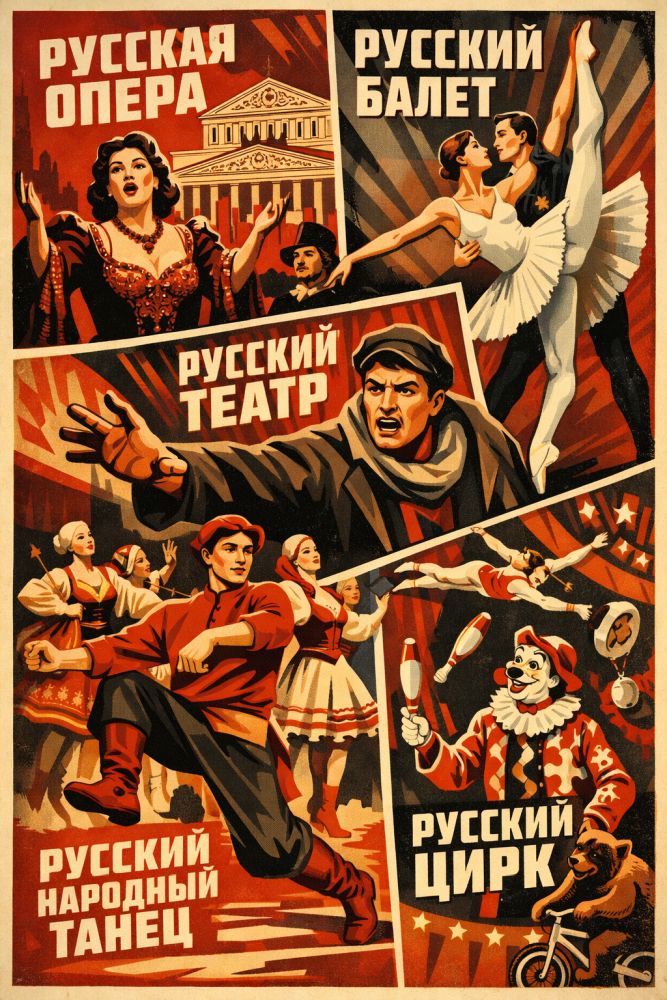
The president of Russia, Vladimir Putin, said one month after the start of the "colonial war of annihilation" [1] he unleashed (on February 24, 2022) against Ukraine that the compositions of Piotr Tchaikovsky, Dmitri Shostakovich, and Sergei Rachmaninoff, [2] were being "erased" from classical concert programs in "the West" (or what he considers as such; therefore here in quotation marks). And according to Putin, the books of Russian (russkie) [3] authors were banned: "The last time such a mass campaign to destroy undesirable literature was carried out by the Nazis in Germany almost 90 years ago." [4]
Outside Russia, hardly anyone objected to such bizarre comparisons; rather the opposite was true. Thus, Konrad Paul Liessmann, Austria's most prominent living philosopher, categorically stated the following about "the West":
"Anything that doesn't fit the narrative is canceled. In addition to star conductors and opera divas close to Putin, this increasingly affects many committed and irreproachable representatives of Russian culture. [...] Ultimately, political calculations dominate culture. Some overzealous people want to ban Tchaikovsky from concert halls and Dostoevsky from libraries. […] Some actions taken by Ukrainian institutions to increase pressure are causing […] a certain amount of irritation. The fact that concert programs are now being decided not by those responsible for them, but by Ukrainian ambassadors, leaves […] a bad aftertaste. […]." [5]
What is true about this? Very little. There has been and continues to be far less "canceling" of the "great Russian culture" in Western Europe and North America than warnings about such things. The claim that "Ukrainian ambassadors" now decide on concert programs is nothing more than polemical (or an unfortunate attempt at humor).
The 'background' of Russia's international cultural policy, its motives, intentions, and goals have rarely (if ever) been given any attention in "the West." This analysis aims to remedy that situation, at least to some extent. The starting point is official documents on Russia's foreign and security policy, which – when interpreted correctly – provide important clues and make it clear that Moscow's primary concern in the cultural sphere is also the projection and constant expansion of it s own influence in the world.
"Cooperation between diplomacy and culture has along historical tradition and serves Russia's national interests."
The 1993 Russian Constitution, as amended in 2020 (Article 44.3), states: "Everyone is obliged to ensure the preservation of cultural and historical heritage and to protect monuments of history and culture." [6] A document from 2001 (adopted shortly after Putin became president of Russia) stated: "Culture plays a special role in the implementation of Russia's foreign policy." [7] The same document revealed that foreign cultural policy is also, and indeed primarily, about the 'efficiency' of the Kremlin's entire foreign policy:
"Through the use of specific instruments, approaches and methods, cultural diplomacy can make a significant contribution to achieving fundamental goals and increasing the effectiveness of Russian foreign policy. Cooperation between diplomacy and culture has along historical tradition and serves Russia's national interests." [8]
Unsurprisingly, a document from 2014 explicitly listed "the promotion of Russian [russkaya] culture abroad" as part of the state's cultural policy. [9] So, this means specifically "russkaya" – and not "rossiiskaya" culture, which would theoretically also include the cultures of other peoples in Russia. However, many relevant documents do refer (in this or similar terms) to the "cultures of the peoples of the Russian Federation." For example, a document from 2010 states:
"Efforts should be made to present the best achievements of Russian culture – music and theater of all types and genres, including opera, ballet, and drama; singing and dancing of the peoples of Russia; circus and variety shows – as widely as possible abroad." [10]
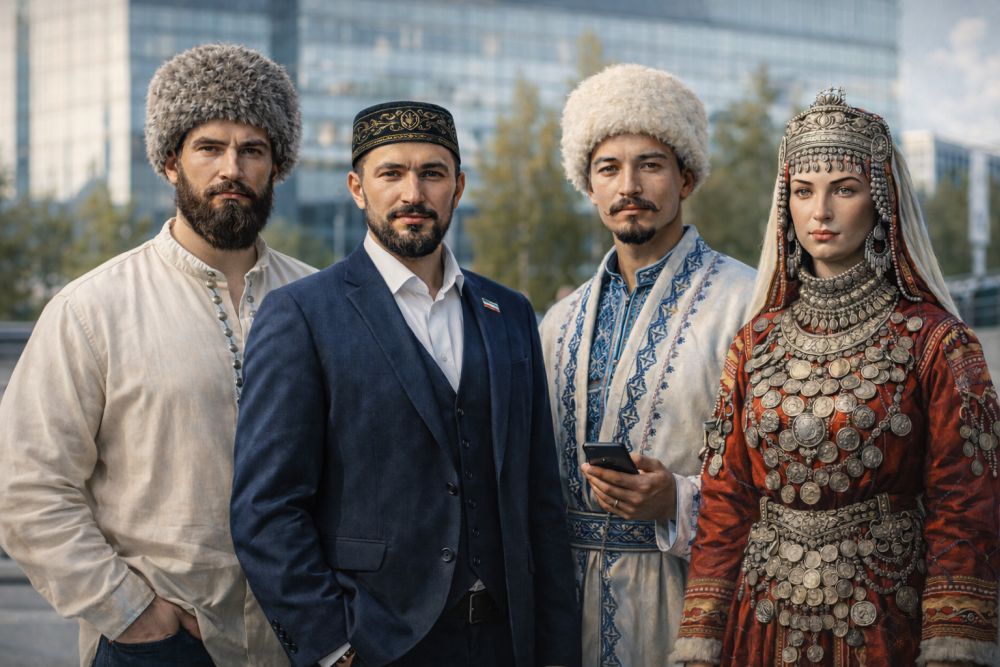
However, in practice, the Kremlin makes little or no effort to promote or showcase the cultures of Russia's non-Slavic peoples, such as the Chechens, Tatars, Bashkirs, Chuvash, Yakuts, Buryats, etc. (all of whom are also under massive pressure to undergo Russification). Moscow limits itself (with very few exceptions) to Russian (russkaya) culture, understood in an ethnic sense, and this is indeed emphatically 'promoted' abroad.
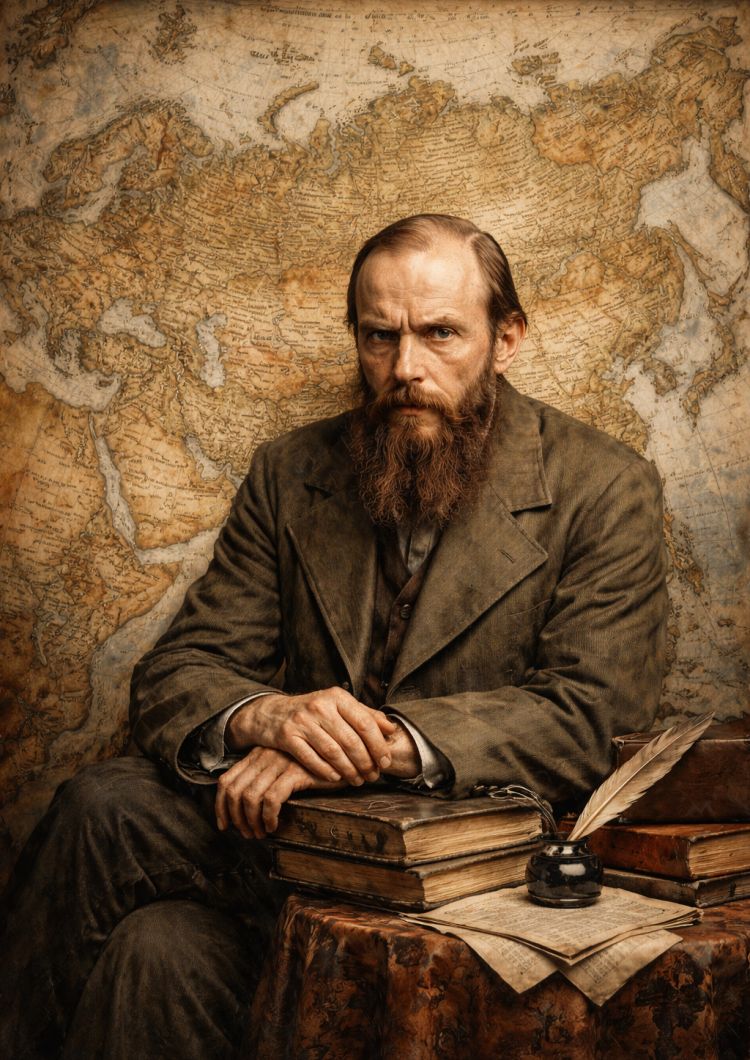
Even and especially in "the West," there is often talk of a "great Russian culture," even though it is unclear why it should be "great" (or even "greater") than other cultures. Sergei Lebedev, an author from Russia who lives in Berlin and opposes Putin, said in response to Russia's war against Ukraine: "We are no longer a great culture. We are simply a culture." [11] Yet in "the West" no other culture is permanently attributed such "greatness," whereby its instrumentalisation for political, imperialist and militaristic purposes by the Kremlin is astonishingly often (or rather, in most cases) overlooked [12] – as is the fact that many ‘saints' of this very culture have openly supported, justified and defended Russian imperialism. This applies, for example, to Fyodor Dostoevsky (1821–1881), about whose political writings, and especially the "Writer's Diary," the German Germanist and cultural scholar Helmut Lethen remarked that one could find there the "Slavophile idea of a Russian empire stretching from Moscow to Lisbon," which was supposed to "sweep the entire degenerate West from the face of the earth." And: As a Slavophile, Dostoevsky "advocates imperial expansion of the Russian Empire." [13] However, precisely this is ‘music to the ears' of Putin and his ideologists.
In today's Russia, one constantly hears that Russians (russkie) are the only "state-forming people" – a term intended to belittle the other, non-ethnic Russian peoples of the multi-ethnic state of Russia, which does exactly that. Nevertheless – or perhaps precisely because of this – Putin had enshrined this term in the constitution in 2020 (although it had already been in constant use in the public sphere for years); there had been no political, media, (social) scientific or other resistance to this humiliation of ethnic non-Russians, either in Russia itself or abroad. The "Strategy of the State Nationality Policy of the Russian Federation until 2036" of November 25, 2025, also refers to the desired "strengthening of the unifying role of the Russian people as the state-forming people." [14]
This is to be achieved through a series of measures, including "creating favorable conditions for the preservation and development of the culture of the Russian [russkii] people"; "ensuring activities in the field of scientific research into the history and culture of the Russian people"; "supporting the activities of cultural organizations in the creation of contemporary works that serve to popularize the history and culture of the Russian people"; "promoting a lasting interest in Russian [russkaya] culture and literature among foreign citizens permanently residing in the Russian Federation," etc. [15]
Fundamentally, Putin's Russia acts behind a "facade of superior self-confidence," especially toward "the West" (but definitely not toward China, for example). [16] And when it comes to culture, official documents are not shy about praising themselves. A 2022 "Concept for the Humanitarian Policy of the Russian Federation Abroad" states:
"Russia's centuries of historical experience, rich cultural heritage, and spiritual potential have given the country a special place in the global cultural space and created opportunities for the successful dissemination of traditional Russian [rossiiskie] spiritual and moral values, as well as the best national achievements in the fields of culture, science, education, sports, and information and communication technologies." [17]
In a document first adopted in 2014 and amended in 2023 and 2025, Russia describes itself as "a country with a great culture, a tremendous cultural heritage, centuries-old cultural traditions, and inexhaustible creative potential." [18] And the "Concept for the Foreign Policy of the Russian Federation" (in the 2016 version) called for the "popularization of the achievements of national culture" in the world. [19]
Culture as a tool of "national security"
In the vast majority of countries around the world it would be unthinkable for the political leadership and authorities to openly and unequivocally link culture or foreign cultural policy to "national security." In Russia, however, precisely this is the case. This is evident from numerous official documents, such as the "National Security Strategy" (2009 version), which refers to a "state of national security in the field of culture." The same document emphasized that the aim was to "counter threats in the field of culture." [20] According to the Kremlin, these threats can originate almost exclusively from the "collective West" (a pejorative term that is omnipresent in Russia). The "area of expanding and promoting international cultural and humanitarian relations" officially includes, among other things, "taking measures to protect Russian [rossiiskoe] society from ideological and value-oriented expansion from outside and from destructive informational and psychological influences." [21]
What is being alluded to here? The same document from 2014 accused "a number of unfriendly states, international organizations and transnational corporations, foreign non-governmental organizations, and various extremist and terrorist organizations" of engaging in activities "aimed at undermining the cultural sovereignty of the Russian Federation, destroying traditional Russian [russkie] spiritual and moral values, and exacerbating conflicts in the global information space." [22] This, of course, refers predominantly to "Western" [23] countries (or "our Western partners," as Russia's foreign minister Sergey Lavrov likes to say with a sneer).
The 2015 version of the "National Security Strategy" naturally listed "defending the country" as the top priority among spin doctors; only then other points followed, including (and undoubtedly not coincidentally mentioned together in one sentence) "preserving and developing culture, traditional Russian [rossiiskie] spiritual and moral values." [24] Furthermore, the document lamented:
„Threats to national security in the cultural sphere include the erosion of traditional Russian [rossiiskie] spiritual and moral values and the weakening of the unity of the multinational population of the Russian Federation through external cultural and informational expansion (including the spread of low-quality mass culture products), propaganda for promiscuity and violence, and racist, ethnic, and religious intolerance, as well as the decline in the importance of the Russian language in the world and the quality of its teaching in Russia and abroad, attempts to falsify Russian [rossiiskaya] and world history, and unlawful interference with cultural property." [25]
Such and similar tearful complaints run through almost all documents on Russian foreign and security policy. In 2022, for example, it was stated that consideration should be given to the fact that there are
"increased attempts to downplay the importance of Russian [rossiiskaya] culture and Russian [rossiiskie] humanitarian projects, to spread and enforce a distorted representation of Russia's true goals regarding the familiarization of the global community with its cultural heritage and achievements in various humanitarian fields, to discredit the Russian world [Russkii mir], its traditions and ideals, and to replace them with pseudo-values." [26]
And in 2025, the Kremlin once again complained about
"growing Russophobia at the international level, the discrediting of the Russian language and culture, as well as Russia's traditional religions, [27] increased efforts to distort historical truth and erase historical memory of the Great Patriotic War." [28]
These are conspiracy theories that are endlessly repeated. They have always been an integral part of politics, the media, diplomacy, the social sciences, and so on in Putin's Russia (even though the intensity with which they have been spread has increased dramatically since 2014 and then again since 2022 – apparently in connection with the massively expanded war against Ukraine).
One of the key terms in Russia's ‘political landscape' is ‘sovereignty' – very much in the sense used by the German Carl Schmitt (1888–1985), the "crown jurist of the Third Reich," from whom Alexander Dugin, the "political philosopher" sometimes referred to in "the West" as "Putin's brain" and one of the Kremlin's most important ideologists, has borrowed heavily.
In practice, this "sovereignty" means that the Kremlin does not allow anyone or anything, no political force, institution, or written agreement inside or outside Russia, to ‘interfere' in its decisions on war and peace – and therefore also not other countries, international organizations, or international law (not even its own Russian [rossiiskoe] law). From the Kremlin's point of view, this strategy has been and continues to be very successful, as it has hardly ever been contested in the international arena at least outside Ukraine (not to mention active countermeasures); this is precisely what contributed massively to Putin's decision to order the large-scale attack on Ukraine in 2022. Throughout, the Kremlin's extremely nationalistic, imperialistic, and militaristic ideology guides its actions, to which cultural policy at home and abroad is also and especially subject.
"Culture must be an effective instrument for securing our country's foreign policy and economic interests"
This understanding of "sovereignty" also appears in official Russian [rossiiskie] documents in the context of cultural policy, for example in the "Fundamentals of State Cultural Policy" (here in the 2025 version), where the objectives of this policy include "ensuring the cultural sovereignty of the Russian Federation" and "strengthening the role of the Russian Federation in the global humanitarian and cultural sphere." This "cultural sovereignty" is defined as the
"totality of sociocultural factors that enable the people and the state to shape their identity, avoid sociopsychological and cultural dependence on external influences, be protected from destructive influences in the realms of ideology and information, preserve historical memory, and adhere to traditional Russian spiritual and moral values." [29]
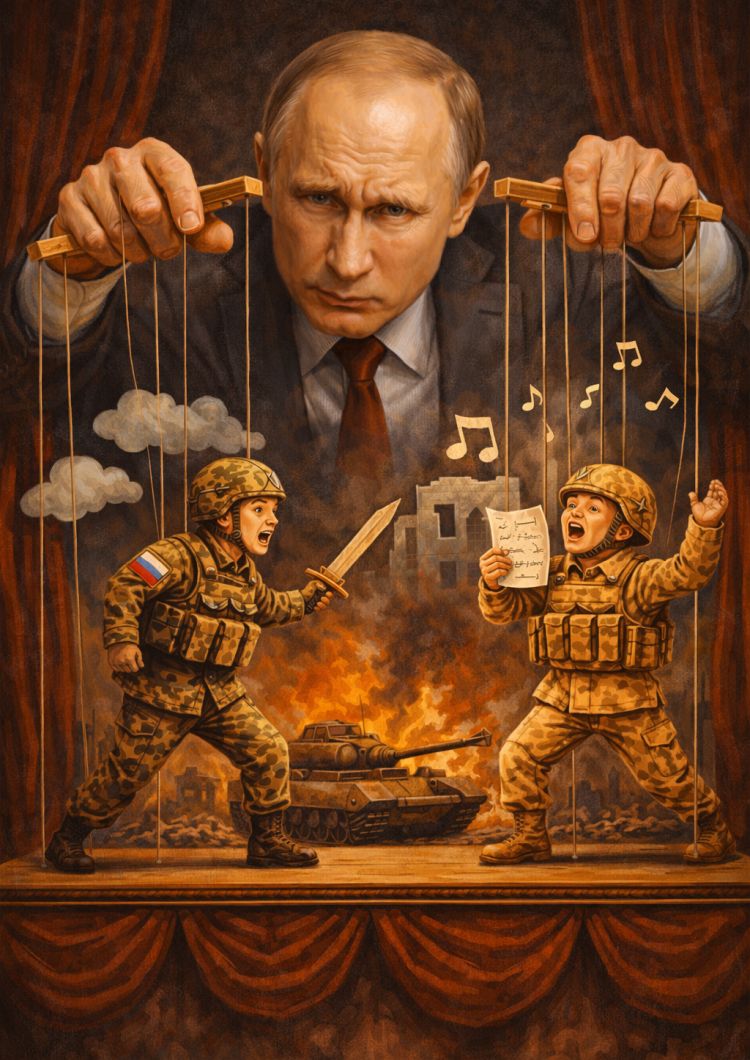
Culture is explicitly used as a form of 'soft power' to achieve geopolitical goals. A 2007 Foreign Ministry document stated:
"Culture must be an effective instrument for securing our country's foreign policy and economic interests and shaping a positive image of it around the world. The experiences of the world's leading powers, which regard this orientation as one of the elements of ‘soft power' and deploy considerable human, financial, and informational resources to achieve their goals, are proof of this." [30]
In 2010, one could read:
"Through the use of specific forms and methods of influencing public opinion, cultural diplomacy, like no other instrument of ‘soft power', is capable of contributing to strengthening the country's international authority and serving as convincing proof of the rebirth of the Russian Federation as a free and democratic state." [31]
The Foreign Policy Concept (2013 version) specified:
"Soft power, a comprehensive set of instruments for achieving foreign policy goals based on the potential of civil society, information, cultural and other methods and technologies that represent an alternative to traditional diplomacy, is becoming an indispensable part of modern international relations." [32]
Culture as an instrument of Russian ‘soft power' remained on the Kremlin leadership's agenda. Shortly after the start of the large-scale attack on Ukraine, it was announced:
"Russian [rossiiskaya] culture is an important and integral part of world culture. As an instrument of ‘soft power', it contributes to strengthening Russia's international reputation, forming an objective perception of the country abroad and neutralizing anti-Russian entiments of political and ideological origin. International cultural and humanitarian cooperation should create favorable conditions for the implementation of foreign policy goals and at the same time contribute to the establishment of constructive dialogue and the overcoming of differences of opinion with foreign partners."
Cultural exchanges with other countries serve to “convey an objective image of Russia as a friendly and democratic state”
And the same document states that official Russia considers "culture to be an instrument for achieving mutual understanding and overcoming conflicts between states and peoples." [33] – Of course, it is preposterous to talk about "constructive dialogue" and "overcoming differences of opinion with foreign partners" through "international cultural and humanitarian cooperation" just over half a year after the start of the war of annihilation against Ukraine. And only the intention to appear as scornful as possible can explain the statement in the same document that cultural exchange with foreign countries also serves to "convey an objective image of Russia as a friendly and democratic state that is open to interaction with the cultures of other peoples." [34]
However, the obvious frivolity in official Russian documents began long before 2022. For example, a document from 2010 contained the following passage:
"In view of globalization and increasing attempts to divide the world according to civilizational criteria, the comprehensive and effective use of the spiritual and cultural potential of the Russian Federation can help to convey an objective and positive image of our country. Effective measures in this direction serve the interest of increasing the number of Russia's friends, counteracting the emergence of new dividing lines, and neutralizing anti- Russian [rossiiskie] sentiments of political and ideological origin." [35]
Naturally, here again, one must read between the lines. "Objective and positive" means: in the opinion of the Kremlin. What is entirely accurate, however, is that Putin's aim is to "increase the number of Russia's friends" – in the sense that as many politicians, parties, media outlets, academics, cultural figures, etc. as possible should support Putin's policies abroad. The same document stated that the "potential of culture as an effective tool for bridging differences between states" is increasing. [36] Russian culture is, in its own description, "characterized by openness and receptiveness to the cultures of other countries and peoples due to the peculiarities of its historical development." [37] In Russia, there is allegedly "a dynamic cultural life characterized by diversity and freedom of creativity, pluralism of opinion, and no restrictions on censorship." [38] (!)
In contrast, it is entirely credible when official Russian documents state that Moscow is striving to "create a positive image of Russia" [39] ; this image has to "correspond to the authority of its culture." [40] It is also clearly true that the Kremlin is particularly concerned with "promoting a positive perception of the Russian Federation in the world" and "spreading the Russian language and culture of the peoples of Russia in other countries." [41] It is, of course, no coincidence that Russian "language and culture" are often mentioned in the same breath in official Russian [rossiiskie] documents. For example, it has been said that "the Russian language and the great Russian [russkaya] culture play a central, unifying role in the historical consciousness of the multinational Russian [rossiiskii] people." [42] From 1991 onwards, the Kremlin also intended to use this "language and culture" as tools to promote so-called "integration in the post-Soviet space," [43] but this plan disappeared from the agenda, at least in its original form, after Russia launched its large-scale attack on Ukraine.
A document from 2001 stated:
„In implementing Russia's foreign cultural policy, particular emphasis is placed on stabilizing and strengthening the position of the Russian language, expanding its use in international communication, including in the activities of international organizations, and preserving its status as a world language. The Russian language must remain an important instrument for introducing other peoples to [rossiiskaya] Russian culture and is one of the key factors in shaping a positive perception of Russia in the international community. Within the scope of the possibilities offered by international law, any attempt to disadvantage or discriminate against the Russian language must be resolutely counteracted." [44]
"One of the most important priorities of foreign cultural policy is the systematic and multifaceted support of Russian [rossiiskie] compatriots, the protection of the rights of Russian citizens [...] in the areas of culture, language, education, and information."
Moscow has repeatedly attempted (albeit with varying degrees of success) to exploit the "ethnically Russian," Russian, or "Russian-speaking" diaspora throughout the world (and especially in the post-Soviet republics, Western Europe, and North America). It is openly regarded as a lever for, among other things, "expanding and consolidating the spread of the Russian language and culture" [45] and is a significant focus of attention for the Moscow secret services. In 2001, one could read:
"One of the most important priorities of foreign cultural policy is the systematic and multifaceted support of Russian [rossiiskie] compatriots, the protection of the rights of Russian [rossiiskie] citizens permanently residing abroad, and support in realizing the rights of the Russian-speaking population of countries abroad in the areas of culture, language, education, and information." [46]
In 2013, Moscow promised to
"protect the rights and legitimate interests of compatriots living abroad on the basis of international law and the international treaties of the Russian Federation, while treating the millions-strong Russian [russkaya] diaspora as partners, including in expanding and strengthening the sphere of Russian language and culture." [47]
Many relevant documents and statements by Russian [rossiiskie] politicians, spin doctors, diplomats, etc. have long referred directly to the "necessity" of "developing" or ‘expanding' the network of Russian [rossiiskie] "cultural centers" (or "Centers for science and culture") abroad. [48] It is an ‘open secret' that these "centers," which are of course exclusively state-run, serve to project political influence.[49] But in most "Western" countries (including Austria) they are able to operate completely unrestricted even after 2022 (while the Russian army relentlessly destroys cultural institutions in Ukraine, murders their staff, etc.). The (naturally unacknowledged) reason for this situation is the constant "Western," as the German historian and publicist Gerd Koenen calls it, "self-idiotizing fear" [50] of ‘escalation' which, in turn, is perceived in Russia – and rightly so – as weakness. Which the Kremlin consistently exploits.
A particularly vivid illustration of this situation is the large (29,000 square meters on seven floors) "Russian House" on Friedrichstrasse in downtown Berlin, which the German authorities have not closed down – despite the 'usual' Russian propaganda against Ukraine and the "collective West" [51] that is disseminated there and the fact that its operation most likely violates the EU sanctions against the Rossotrudnichestvo agency (which reports to the Foreign Ministry) [52] that has been in place since July 2022 and operates these "houses" (or "centers"). Such institutions have recruited mercenaries for the war against Ukraine (!), particularly in various Third World countries, [53] without triggering a wave of their closure in the EU.
Chapter 2: Russian Culture in the Service of War
Dr Martin Malek is a political scientist whose research focuses, amongst other things, on theories of ‘failed states’, the monitoring of ethnic conflicts in the former Soviet Union, and the analysis of security, military, language and religious policies in the former Soviet republics. He is the author of numerous articles and several books, including "Der Zerfall der Sowjetunion. Ursachen – Begleiterscheinungen – Hintergründe” (The Collapse of the Soviet Union: Causes – Consequences – Background, edited jointly with Anna Schor-Tschudnowskaja, Nomos Verlag, Baden-Baden 2013).
Sources & Notes
[1] Milo Rau, Russland aus dem Hals reißen: Ein Besuch in Kiew [Getting Russia off our backs: A visit to Kiev]. Die Presse, December 3, 2026, pp. 26-27, here p. 26. – Rau is a (politically left-leaning) Swiss playwright, theatre director, journalist, essayist and, since July 2023, artistic director of the Vienna Festival (Wiener Festwochen).
[2] However, Putin's mention of these three undoubtedly great composers raises a number of questions. Tchaikovsky (1840–1893) was homosexual, which in today's homophobic Russia with its incessant (albeit hypocritical) emphasis on "traditional family values" should actually be considered 'highly problematic.' Sergei Rakhmaninov (1873–1943) left Russia after Vladimir Lenin's Bolsheviks seized power in October 1917. At the end of 1918, the pianist and composer emigrated to the United States, whose citizen he became shortly before his death. After signing a newspaper article criticizing Soviet cultural policy in early 1932, his works were effectively banned in the USSR, and he was subjected to a smear campaign by the state media there; see: Sylvia Schreiber, Aufführungsverbot nach New York Times-Artikel [Performance Ban Following New York Times Article]. BR Klassik, January 12, 2022, https://www.br-klassik.de/themen/klassik-entdecken/sergej-rachmaninow-boykott-in-der-udssr-was-heute-geschah-12011931-100.html (accessed January 28, 2026). And Shostakovich was the target of a propaganda campaign in the Soviet media from early 1936 onwards on account of his opera «Lady Macbeth of Mtsensk», which premiered in Leningrad in 1934 (and was a huge success both in the USSR and abroad). In 1937 in particular he feared arrest, but this did not happen (cf. Julian Barnes, The Noise of Time. London 2016).
[3] The difference between 'russkii' and 'rossiiskii,' that the English language cannot convey, is (also) important for the present topic: the former term refers to the ethnic component, the latter to Russia as a state. Thus, peoples like the Tatars, Chechens, Ingush, Yakuts, Bashkirs, etc. are ethnically non-Russian, but – since they live on the territory of Russia – 'rossiiskie.'
[4] Quoted from: Дарья Эрозбек, Путин: "культура отмены" превратилась в отмену культуры [Dar’ya Erozbek, Putin: The "cancel culture" has turned into the abolition of culture]. Kommersant’, March 25, 2022, https://www.kommersant.ru/doc/5280435 (accessed January 27, 2026).
[5] Konrad Paul Liessmann, Lauter Lügen und andere Wahrheiten [Nothing but lies and other truths]. Wien 2023, pp. 230-231
[6] Конституция Российской Федерации. Президент России [The Constitution of the Russian Federation. The President of Russia], http://www.kremlin.ru/acts/constitution/item (accessed February 11, 2026).
[7] Основные направления работы МИД России по развитию культурных связей России с зарубежными странами. Утверждены Министром иностранных дел Российской Федерации И. С. Ивановым 23 февраля 2001 года [Main directions of the Russian Foreign Ministry's work on developing Russia's cultural ties with foreign countries. Approved by the Minister of Foreign Affairs of the Russian Federation, I. S. Ivanov, on February 23, 2001], https://studfile.net/preview/13193182/page:52/ (accessed November 23, 2025). This was repeated later in a similar or identical manner, cf. e.g. Основные направления политики Российской Федерации в сфере международного культурно-гуманитарного сотрудничества. Утверждены Президентом Российской Федерации 18 декабря 2010 года [Main directions of the Russian Federation's policy in the field of international cultural and humanitarian cooperation. Approved by the President of the Russian Federation on December 18, 2010]. https://legalacts.ru/doc/osnovnye-napravlenija-politiki-rossiiskoi-federatsii-v-sfere/ (accessed February 9, 2026).
[8] Основные направления работы МИД России по развитию культурных связей России с зарубежными странами [Main directions of the Russian Foreign Ministry's work on developing Russia's cultural ties with foreign countries], op. Cit.
[9] Указ Президента РФ от 24 декабря 2014 г. N 808 Об утверждении Основ государственной культурной политики. С изменениями и дополнениями от: 25 января 2023 г., 17 июля 2025 г. [Decree of the President of the Russian Federation No. 808 of December 24, 2014, on the Approval of the Fundamentals of State Cultural Policy. With amendments and additions dated January 25, 2023, and July 17, 2025], https://base.garant.ru/70828330 (November 27, 2025).
[10] Основные направления политики Российской Федерации в сфере международного культурно-гуманитарного сотрудничества [Main directions of the Russian Federation's policy in the field of international cultural and humanitarian cooperation], op. Cit.
[11] Quoted from: Jutta Sommerbauer, "Wir sind keine große Kultur mehr" ["We are no longer a great culture"; interview with Lebedev]. Die Presse, October 22, 2023, p. 48.
[12] The former (1998–2005) German Chancellor Gerhard Schröder (Social Democratic Party), who remained influential long after his formal departure from politics, wrote the following in a guest column in a newspaper in January 2026 (in which he pretended to be "concerned about Germany"): "Russia is not a country of barbarians, but a country with a great culture"; in the same breath, he called for the renewed "import of cheap energy from Russia"; Gerhard Schröder, "Ich sorge mich um die Zukunft unseres Landes" ["I am concerned about the future of our country."]. Berliner Zeitung, January 23, 2026, https://www.berliner-zeitung.de/politik-gesellschaft/ein-jahrzehnt-der-bewaehrung-li.10015423 (accessed January 25, 2026).
[13] Quoted from: Andreas Karlaganis and Victor Schlothauer, Verteufelt human [Devilishly humane; interview with Lethen]. Burgtheater [Vienna-based national theater of Austria], https://2019-2024.burgtheater.at/verteufelt-human (accessed February 8, 2026).
[14] This is an indirect but clear description of the Kremlin's intention to put even more pressure on non-Russians than before, with the aim of Russifying them.
[15] Стратегия государственной национальной политики Российской Федерации на период до 2036 года. Указ Президента РФ от 25.11.2025 N 858 [Strategy of the Russian Federation's national policy for the period up to 2036. Decree of the President of the Russian Federation No. 858 of 25 November 2025], https://pravo.ppt.ru/ukaz/321060 (accessed February 9, 2026).
[16] Gerd Koenen, Im Widerschein des Krieges. Nachdenken über Russland [In the shadow of war. Reflections on Russia]. München 2023, p. 231.
[17] Указ Президента Российской Федерации от 05.09.2022 г. № 611: Об утверждении Концепции гуманитарной политики Российской Федерации за рубежом. В редакции Указа Президента Российской Федерации от 17.10.2022 № 747 [Decree of the President of the Russian Federation No. 611 dated September 5, 2022: On the Approval of the Concept of the Humanitarian Policy of the Russian Federation Abroad. As amended by Decree of the President of the Russian Federation No. 747 dated October 17, 2022], http://www.kremlin.ru/acts/bank/48280/page/1 (accessed January 12, 2026).
[18] Указ Президента РФ от 24 декабря 2014 г. N 808 Об утверждении Основ государственной культурной политики [Decree of the President of the Russian Federation No. 808 of December 24, 2014, on the Approval of the Fundamentals of State Cultural Policy.], op. Cit.
[19] Указ Президента Российской Федерации от 30.11.2016 г. № 640 Об утверждении Концепции внешней политики Российской Федерации. Президент России [Decree of the President of the Russian Federation No. 640 of November 30, 2016, on the Approval of the Foreign Policy Concept of the Russian Federation. President of Russia], http://www.kremlin.ru/acts/bank/41451 (accessed February 14, 2026).
[20] Strategie der nationalen Sicherheit der Russischen Föderation bis zum Jahr 2020. Bestätigt durch Erlass Nr. 537 des Präsidenten der Russischen Föderation vom 12. Mai 2009. DSS-Arbeitspapiere, Heft 96 – 2009 [National Security Strategy of the Russian Federation until 2020. Approved by Decree No. 537 of the President of the Russian Federation dated May 12, 2009. DSS Working Papers, Issue 96 – 2009], https://slub.qucosa.de/api/qucosa%3A32546/attachment/ATT-0/ (accessed November 20, 2025), p. 31.
[21] Указ Президента РФ от 24 декабря 2014 г. N 808 Об утверждении Основ государственной культурной политики [Decree of the President of the Russian Federation No. 808 of December 24, 2014, on the Approval of the Fundamentals of State Cultural Policy], op. Cit.
[22] Ibid.
[23] The term "Western" should be placed in quotation marks as it refers to the dominant Russian interpretation of the term, which reflects the projections, stereotypes, and propagandistic intentions of the Putin regime far more than the actual situation.
[24] Указ Президента Российской Федерации от 31.12.2015 г. № 683. О Стратегии национальной безопасности Российской Федерации, http://www.kremlin.ru/acts/bank/40391 (accessed January 16, 2026).
[25] Ibid.
[26] Указ Президента Российской Федерации от 05.09.2022 г. № 611 [Decree of the President of the Russian Federation No. 611 dated September 5, 2022], op. Cit.
[27] In fact, this refers only to the Russian Orthodox Church (ROC), which is 'distinguished' by its close ties to the state, its armed forces and intelligence services; see: Martin Malek, Postsowjetische Symbiose. Die Orthodoxe Kirche und Russlands Sicherheitsorgane [Post-Soviet Symbiosis: The Orthodox Church and Russia’s Security Agencies]. Welttrends, no. 80, September/October 2011, pp. 74-82.
[28] Стратегия государственной национальной политики Российской Федерации на период до 2036 года [Strategy of the Russian Federation's national policy for the period up to 2036], op. Cit.
[29] Указ Президента РФ от 24 декабря 2014 г. N 808 "Об утверждении Основ государственной культурной политики" [Decree of the President of the Russian Federation No. 808 of December 24, 2014, on the Approval of the Fundamentals of State Cultural Policy], op. Cit.
[30] A Survey of Russian Federation Foreign Policy (2007). Ministry of Foreign Affairs of the Russian Federation, Information and Press Department. https://www.mid.ru/en/foreign_policy/news/1676553/ (accessed February 21, 2026).
[31] Основные направления политики Российской Федерации в сфере международного культурно-гуманитарного сотрудничества [Main directions of the Russian Federation's policy in the field of international cultural and humanitarian cooperation], op. Cit.
[32] Концепция внешней политики Российской Федерации. Утверждена Президентом Российской Федерации В. В. Путиным 12 февраля 2013 г. [Foreign Policy Concept of the Russian Federation. Approved by the President of the Russian Federation, V. V. Putin, on February 12, 2013], https://www.garant.ru/products/ipo/prime/doc/70218094/ (accessed February 21, 2026).
[33] Указ Президента Российской Федерации от 05.09.2022 г. № 611 [Decree of the President of the Russian Federation No. 611 dated September 5, 2022], op. Cit.
[34] Ibid.
[35] Основные направления политики Российской Федерации в сфере международного культурно-гуманитарного сотрудничества [Main directions of the Russian Federation's policy in the field of international cultural and humanitarian cooperation], op. Cit.
[36] Ibid.
[37] Ibid.
[38] Ibid.
[39] Ibid.
[40] Концепция внешней политики Российской Федерации. Утверждена Президентом Российской Федерации В. В. Путиным 12 февраля 2013 г. [Foreign Policy Concept of the Russian Federation. Approved by the President of the Russian Federation, V. V. Putin, on February 12, 2013], op. Cit.
[41] Концепция внешней политики Российской Федерации. Утверждена Президентом Российской Федерации 28 июня 2000 года, https://ir.rudn.ru/books/b2/30.pdf (accessed February 21, 2026).
[42] Указ Президента РФ от 24 декабря 2014 г. N 808 "Об утверждении Основ государственной культурной политики" [Decree of the President of the Russian Federation No. 808 of 24 December 2014, on the Approval of the Fundamentals of State Cultural Policy], op. Cit.
[43] Regarding this so-called "integration," through which Moscow sought to commit the other post-Soviet republics to the role of 'satellites' that would follow its course as closely as possible, see: Martin Malek, "Integration" in der GUS und die Politik Russlands ["Integration" in the CIS and Russia’s Policy]. Landesverteidigungsakademie [National Defense Academy] (ed.): Integration in der GUS [Integration in the CIS]. Schriftenreihe der Landesverteidigungsakademie [Publications Series of the National Defense Academy], no. 3, 2010, pp. 21-67.
[44] Основные направления работы МИД России по развитию культурных связей России с зарубежными странами [Main directions of the Russian Foreign Ministry's work on developing Russia's cultural ties with foreign countries], op. Cit.
[45] Концепция внешней политики Российской Федерации. Утверждена Президентом Российской Федерации Д.А.Медведевым 12 июля 2008 г. [Foreign Policy Concept of the Russian Federation. Approved by President of the Russian Federation D.A. Medvedev on July 12, 2008], Министерство иностранных дел Российской Федерации [Ministry of Foreign Affairs of the Russian Federation], https://www.mid.ru/ru/foreign_policy/news/1670707/ (accessed February 20, 2026); very similar: Концепция внешней политики Российской Федерации. Утверждена Президентом Российской Федерации В.В. Путиным 12 февраля 2013 г. [Foreign Policy Concept of the Russian Federation. Approved by President of the Russian Federation V.V. Putin on February 12, 2013], Garant.ru, https://www.garant.ru/products/ipo/prime/doc/70218094/ (accessed March 21, 2026).
[46] Основные направления работы МИД России по развитию культурных связей России с зарубежными странами [Main directions of the Russian Foreign Ministry's work on developing Russia's cultural ties with foreign countries], op. Cit.
[47] Концепция внешней политики Российской Федерации. Утверждена Президентом Российской Федерации В.В. Путиным 12 февраля 2013 г. [Foreign Policy Concept of the Russian Federation. Approved by President of the Russian Federation V.V. Putin on 12 February 2013], op. Cit.
[48] See, for example: A Survey of Russian Federation Foreign Policy (2007), op. Cit.; Указ Президента Российской Федерации от 07.05.2012 г. № 605: О мерах по реализации внешнеполитического курса Российской Федерации. Президент России [Decree of the President of the Russian Federation No. 605 of 7 May 2012: On Measures to Implement the Foreign Policy Course of the Russian Federation. President of Russia], http://static.kremlin.ru/media/acts/files/0001201205070025.pdf (accessed January 11, 2026).
[49] Pascal Siggelkow, Wie Russland Kultureinrichtungen missbraucht [How Russia Abuses Cultural Institutions]. Tagesschau, January 17, 2025, https://www.tagesschau.de/faktenfinder/kontext/russland-kulturdiplomatie-100.html (accesses January 26, 2026).
[50] Koenen, Im Widerschein des Krieges [In the shadow of war], op. Cit., p. 231.
[51] See, for example: Nikolai Klimeniouk, Propaganda in bester Berliner Lage [Propaganda in a prime Berlin location]. Frankfurter Allgemeine Zeitung, April 13, 2024, https://www.faz.net/aktuell/feuilleton/debatten/buchhandlung-mnogoknig-im-russischen-haus-in-berlin-19646794.html (accessed January 23, 2026).
[52] Patrick Heinemann, Kreml-Propaganda im Herzen der Hauptstadt [Kremlin propaganda in the heart of the capital], Legal Tribune Online, 14.12.2022, https://www.lto.de/recht/hintergruende/h/russisches-haus-keine-sanktionen-berlin-untaetig (January 23, 2026).
[53] Dmytro Zhmailo, We Must Cut Off the Labor Sources of Russia’s War Machine. The Moscow Times, August 13, 2025, https://www.themoscowtimes.com/2025/08/13/we-must-cut-off-the-labor-sources-of-russias-war-machine-a90190 (accessed August 13, 2025).
Even during the Soviet era, Russian theatre was regarded as ‘soft power’ – a concept that has been successfully refined over the past two decades (visualisation: ChatGPT)
Even during the Soviet era, Russian theatre was regarded as ‘soft power’ – a concept that has been successfully refined over the past two decades (visualisation: ChatGPT)
The idea of a Russian empire stretching from Moscow to Lisbon can already be found in the works of Fyodor Dostoevsky – no wonder he enjoys special protection in Putin’s Russia (visualisation: ChatGPT)
The idea of a Russian empire stretching from Moscow to Lisbon can already be found in the works of Fyodor Dostoevsky – no wonder he enjoys special protection in Putin’s Russia (visualisation: ChatGPT)
"Russian" or "rossiiskaya"? Non-Slavic peoples in Russia are under immense pressure to be Russified (visualisation: ChatGPT)
"Russian" or "rossiiskaya"? Non-Slavic peoples in Russia are under immense pressure to be Russified (visualisation: ChatGPT)
In Russia, military and cultural affairs are a top priority: one depends on the other (visualisation: ChatGPT)
In Russia, military and cultural affairs are a top priority: one depends on the other (visualisation: ChatGPT)
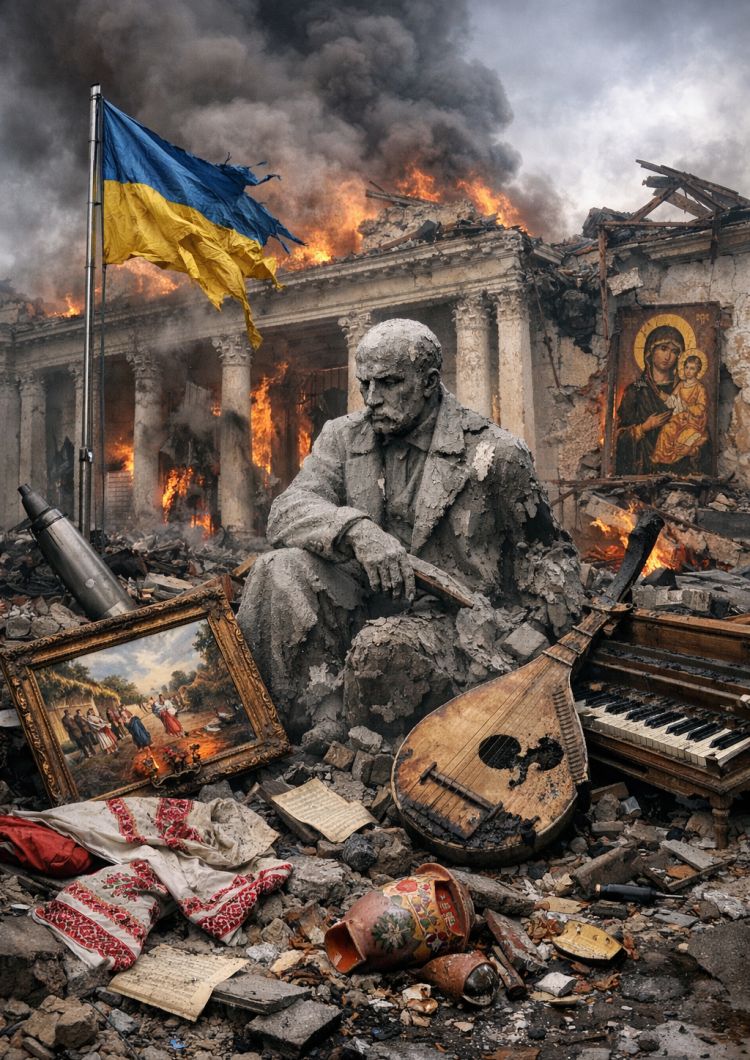
The fact that the Russian army is relentlessly destroying cultural institutions in Ukraine and murdering their staff is the ‘logical’ consequence of a barbaric cultural doctrine (visualisation: ChatGPT)
The fact that the Russian army is relentlessly destroying cultural institutions in Ukraine and murdering their staff is the ‘logical’ consequence of a barbaric cultural doctrine (visualisation: ChatGPT)